

Restoring the Brain. Reclaiming Lives. Inspiring Hope.
Bella's Story
When a brain injury occurs, it thrusts individuals onto a unique and unpredictable journey. These injuries, whether from trauma, degenerative diseases, illness, or other causes, span a spectrum from mild to severe. The path to recovery is often challenging, both in the short and long term, and the outcome following treatment is frequently uncertain. Crucially, if a brain injury is suspected, immediate medical attention is vital to prevent further damage.

Here is Bella's Story.
Five years ago, at the age of 14, I was enjoying the summer at Lake Murray. I had climbed fifteen feet up a pine tree, ready to use the rope swing to jump into the water. Things did not go as planned. Instead, I fell directly onto my head at the foot of the lake. At the time, my dad understood the potential severity of the accident and rushed me to urgent care. They simply glued my lip back together and sent me home. I walked out of urgent care with minimal bruising and no stitches. They assumed I was okay because I showed no apparent external physical damage beyond a torn lip, but what they didn’t see or understand was that I walked out an entirely different person. I thought maybe all I needed was some sleep, and I’d wake up to the person I was before, but I was terribly wrong.

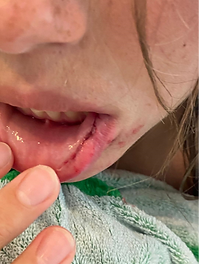
I was several years advanced in school, and my sophomore year (at age 14) started differently. Following the accident, I had multiple emotional breakdowns and could not handle stress. I returned to school and found it almost impossible to stay awake in class (narcolepsy: a rare, long-term brain condition that can prevent a person from choosing when to sleep or wake). I had always easily juggled sports, straight A academics, friends, and family. In fact, at the age of five, I fell in love with school, acquiring knowledge about the world beyond my years, and felt a zest for experiencing and learning everything I could. All that felt put on hold following the accident. I could no longer read without developing an instant headache. I felt abnormal anger, sadness, and daily mood swings. Maintaining healthy relationships was almost impossible.
By the end of my sophomore year, I was unpredictable, defensive, and exhausted. I felt out of control, and I thought I was a different person. My family could not comprehend how the girl who knew her multiplication tables at age five was now sobbing over Algebra 2 and refusing to identify as a “math person” ever again. We were all bewildered by the change.
Over the next two years, I devoted a significant amount of time to rebuilding the life I once had. My traumatic brain injury paused my prior life and left me struggling with once easy things. I faced many obstacles in my day-to-day life, but I began to make progress. I spent a great deal of time at doctor’s appointments, evaluations, and with therapists as they sorted through the complications and treatment of my brain injury.
I have worked hard to compensate for the effects of my injury. I found the most detrimental was my loss of identity. When you can no longer live your life as the person you once were, life as you know it changes. Losing trust in yourself affects every aspect of your life, particularly in your interactions with others. How do you build a strong bond with another individual if you do not have one with yourself? My traumatic brain injury triggered a loss of self and disadvantaged me in every area of my life, including social, family, and academic settings.
Now, five years later, I have continued to make progress and recognize that everything and anything we have can all change in a split second. I know we don’t have time to waste on mindless activities that aren’t making a difference or bringing joy to our lives. Given my young age at the time of my injury, “brain plasticity” has likely allowed me to make what feels like a miraculous recovery. I recognize that not everyone shares that good fortune. As a rising college junior, I will continue to advocate for increased awareness of brain injury and help the public understand the challenges of millions of individuals who experience brain injury every year.